Juniperus phoenicea (Juniper Tree)


At lower altitudes one will find the Maquis forests, one of the predominant species is the Juniper tree (Juniperus phoenicea). Restricted to the area of Troodos, in regions with an altitude of 1000 to 1950 m (Prodromos, Kryos Potamos, Chionistra, Almirolivado, Kannoures and in other areas).
The genus consists of about 60 species, with predominantly the temperate regions of the northern hemisphere. A long-living, evergreen tree, usually 3-5 m in Cyprus, but sometimes up to 20 m, living up to 1500 years. Its bark is usually conical in the beginning, and later becomes spherical or irregular. The bark is asphaltic and flakes in strips, while the wood is very hard, compact, odorous and resistant to attack by insects and fungi. The flowers are unisexual, male cones are small, apical, tan, while the female is axillary with a blue-black color. It grows from December to June. It is mostly a dioecious plant, that means in nature there are male and female plants, while more sparsely one can find plants bearing both male and female flowers.
The Juniper tree can also be used as an ornament. Its wood may be used in traditional building and furniture and small wood pieces, while due to its resistance, aroma and particularly and its attractive colours (intense reddish color) is excellent and highly sought after for carving. Finally, it is very good as firewood and as a repellent of moths in the home.
Location
Flora - Fauna

Crataegus Azarolus (Hawthorn)
The Hawthorn (crataegus azarolus) is a resilient and strong bush and/or tree of the Mediterranean. It thrives in the Troodos mountains up to an altitude of 1800 meters. In soils very acidic to very alkaline (Ph 5-9). It grows slowly and can reach up to

Cypress
On small stretches we find other species, such as cypress trees (Cupressus sempervirens). It is a tree that reaches a height of 30 meters and is a shape of an obelisk. The bark of the tree is divided into stripes that fall apart and fall. Its leaves ar
Cyprus Cedar
In small areas there are other species such as Cedrus brevifolia and Cupressus sempervirens. It is known from antiquity and is mentioned by Theophrastus and Pliny the Elder as a very important forest tree of that time. The Cypriot cedar is one of four

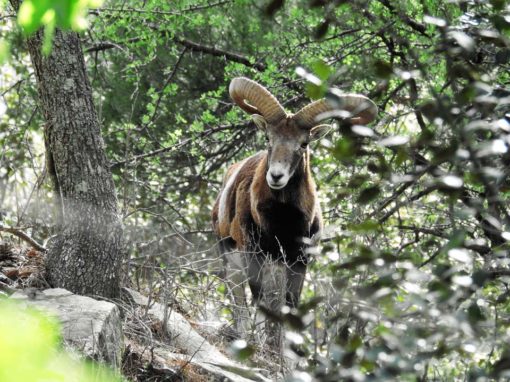
Fenced Area with Moufflons (Platania Excursion Area)
Next to the Platania Excursion area, one can admire the wild, Moufflon of Cyprus in a specially fenced area. The Moufflon (Ovis orientalis ophion) is the largest land mammal and an endemic species of Cyprus and is rightly described as the most importan