



Monument of the 256 Infantry Battalion
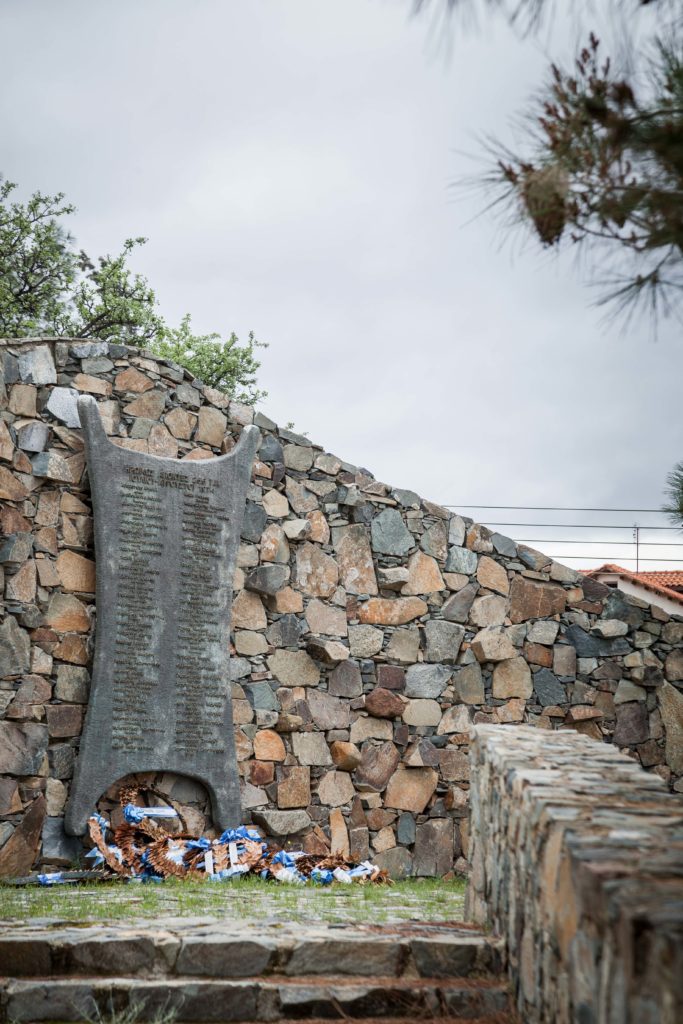

The 256 Infantry Battalion had its headquarters, after the invasion, in Evrychou. National guards from all corners of Cyprus served it and played a decisive role in the main fronts of the battles.
On August 6, and while the truce was agreed, the men of the battalion were trapped in the Lapithos Karavas area by the 39th Division of Attila and attacked.
Few fighters resisted with their meager means causing serious blows to the Turks attack. Shortly before noon, they were ordered to retreat and settle on the Vassileia – Vavila line. But the Turks had managed to reach the area of Aïkerotissa in Lapithos and after they had already been hidden in the reeds that existed in the area, they set up a lethal ambush on their retreating fighters. The report was tough as it counted 58 men dead or missing.
At the initiative of the surviving officers and soldiers of the Order and with the contribution of the Community Council of Evrychou, a memorial was set up to remind them of their sacrifice forever. On the relief plate of the monument are also the 58 victims.
Location
Monuments

Kykkos Watermill
In the village of Kalopanagiotis located in the valley of Marathasa, which was created by the Setrachos river, lies one of the best preserved watermills of the island. Originally belonging to the Kykkos Monastery, they called it ‘The Kykkos Watermill’

Markos Drakou Monument
Markos Drakos was born in Lefka in 1932 and studied at the Samuel School. He was one of the first called to fight in the National Organization of Cypriot Fighters (EOKA), which fought against British colonialism. On the 1st of April, 1955, the official
O Mylos tis Gonias (The Corner Mill)
The abundant waters of Kakopetria, Karkotis and Garillis, gave the necessity for the construction of watermills. O Mylos tis Gonias was one of them. It was built above the main road, on the left bank of the river Agios Nikolaos – a tributary of the Kar

Pafitena’s Olive Mill
The traditional Pafitena’s Olive Mill is located in the centre of Spilia village. It was built in the last century, as evidenced by its press, which is engraved with the date of 1894. It belonged to Katerina Koutsoloizi (Pafitena) from Spilia, wife of

